Mumbai Luxury Real Estate Market 2026: What Buyers Should Know
By Parmar Properties Advisory TeamSouth Mumbai real estate advisors
Market Insights
Mumbai's residential market entered 2026 with a different kind of momentum. The city is no longer in the broad post-pandemic rebound phase; instead, demand is becoming more selective, with buyers concentrating on established developers, stronger locations, larger homes and projects that offer a clear reason to pay a premium.
The numbers remain substantial. Mumbai city recorded 80,221 property registrations in the first half of 2026, according to Knight Frank India's analysis of Maharashtra registration data. At the upper end, CRE Matrix and India Sotheby's International Realty reported ₹18,512 crore of sales in homes priced at ₹10 crore and above during H1 2026. For buyers, the message is not simply that luxury is growing, but that quality, scarcity and micro-market choice matter more than ever.
A Market That Is Strong, but More Selective
Mumbai's August 2026 registrations were projected at 12,503, the strongest August in more than 14 years and 11% higher year-on-year. That indicates sustained underlying demand, but premium buyers are not treating every new launch equally. The market is increasingly rewarding residences with credible delivery, efficient planning, strong neighbourhoods and differentiated views or privacy.
Nationally, CBRE's 2026 outlook describes a strengthening 'flight to quality', with high-end housing taking a larger share of demand. In Mumbai, this is especially visible in the way buyers compare projects: developer track record, usable carpet area, floor density, location and long-term supply are often discussed before the amenity list.
The 2026 luxury buyer is active, but more deliberate about where the premium is being paid.
The ₹20–40 Crore Segment Has Become Important
Within Mumbai's ₹10 crore-plus market, the ₹20–40 crore bracket has emerged as a key growth segment. The H1 2026 luxury report recorded 156 transactions in this bracket, compared with 66 in H1 2023. The rise suggests that a meaningful section of affluent buyers is moving beyond conventional premium apartments toward larger, lower-density and better-located residences.
This does not mean every ₹20 crore residence represents the same value. At this level, buyers should compare privacy, floor plate, view corridors, usable space, lift-to-home ratio, parking, project density and the future supply around the property.
At the top end, price is only the entry point; product quality and scarcity determine whether the premium feels justified.
Worli Leads, but South Mumbai Is Not One Market
Worli stood out in H1 2026, with 159 luxury transactions and ₹4,493 crore in transaction value according to the CRE Matrix-Sotheby's report. Its appeal comes from a combination of centrality, sea-facing possibilities, branded developments, access to business districts and improved north-south connectivity.
However, South Mumbai should not be treated as a single homogeneous market. Malabar Hill offers scarcity and an established residential character; Mahalaxmi combines central access with new large-scale development; Tardeo can offer boutique privacy; Sewri is being reshaped by eastern waterfront connectivity. The right location depends on how the buyer actually lives.
Space and Privacy Are Becoming Luxury Metrics
Apartments measuring 2,000–4,000 sq. ft. represented 58% of primary luxury home sales in H1 2026 in the cited luxury report. That preference is consistent with what many premium buyers now ask for: larger living rooms, utility separation, staff areas, decks, better bedroom proportions and fewer residences sharing a floor.
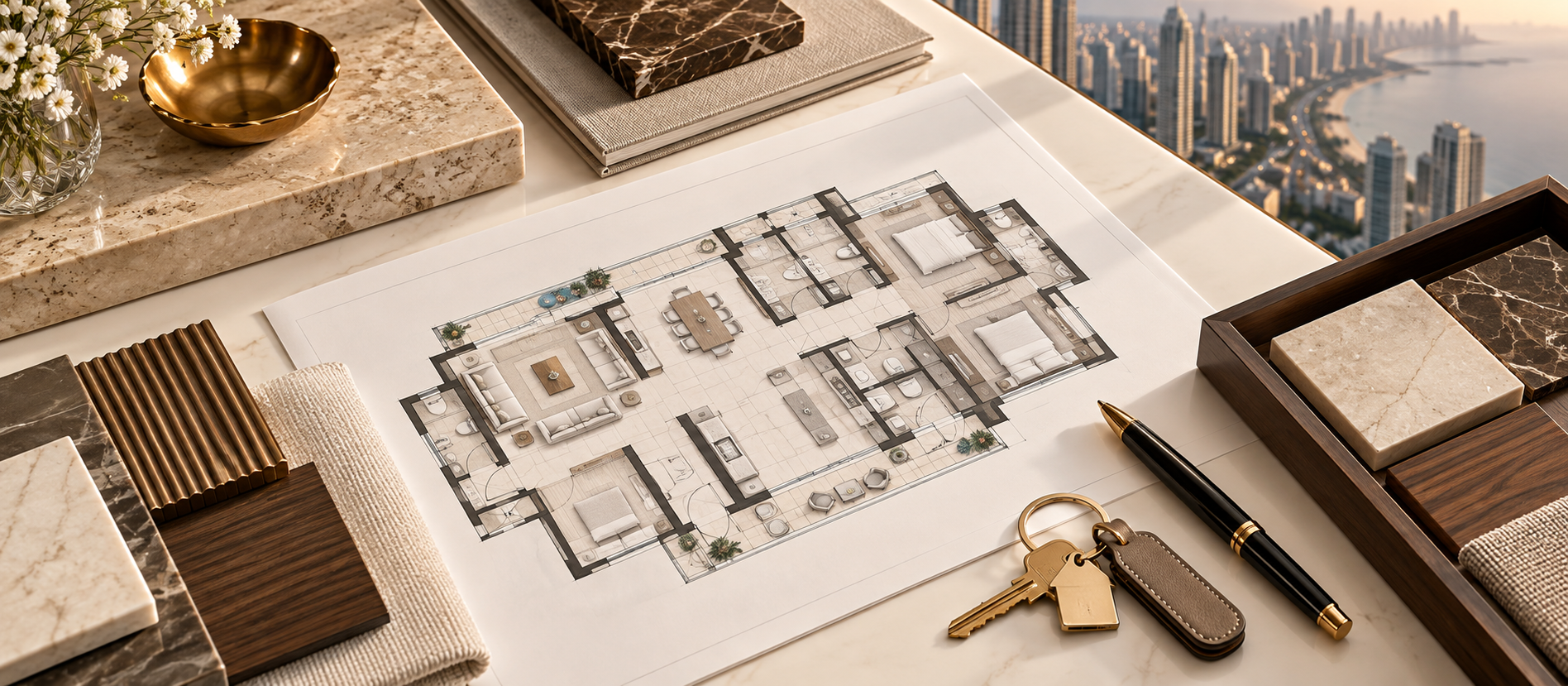
The practical takeaway is to evaluate the home from the inside out. A larger headline area is less useful if circulation is inefficient. Compare carpet area, room dimensions, deck depth, ceiling height, natural light and the number of neighbours per floor.
In luxury housing, how the space works can matter more than how impressive the brochure sounds.
What Buyers Should Do in 2026
Create a shortlist based on three filters: location, residence quality and developer execution. Then compare payment schedule, possession timeline, MahaRERA disclosures, ongoing construction, maintenance assumptions and resale alternatives in the same micro-market. A project should make sense even before incentives are considered.
For HNI and NRI buyers, a curated comparison can be more useful than visiting ten projects. The objective should be to understand what is genuinely scarce, what is readily replaceable and what fits the buyer's lifestyle or portfolio objective.
Looking for a residence in Mumbai? Share your preferred location, budget, residence size and possession timeline with Parmar Properties. Our team can curate a focused shortlist of relevant opportunities for a private discussion.
The strongest buying decisions usually come from comparing fewer, better-matched options in greater depth.
Talk to a South Mumbai property advisor
Parmar Properties has advised buyers, sellers and investors in South Mumbai since 1981. Tell us what you are looking for and we will share options that fit.